Structural Drying & Dehumidification in Corona, NY
Structural drying is what turns a wet house back into a dry one: framing, subfloor, plaster and block brought back to normal moisture levels and verified with readings, not with a glance.
(888) 527-9860Get drying equipment running in Corona- LGR dehumidification
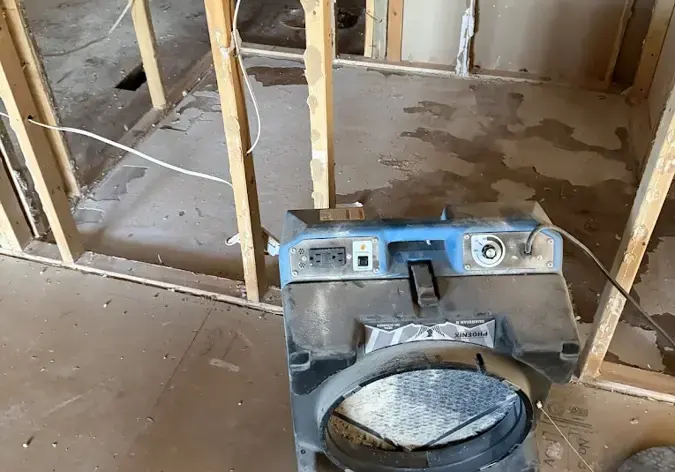
- Air movers set to the load
- Readings until dry
What to do the moment you find wet walls and floors
- 1Stop the water
Drying cannot start until the source is shut off or repaired.
- 2Get the water out
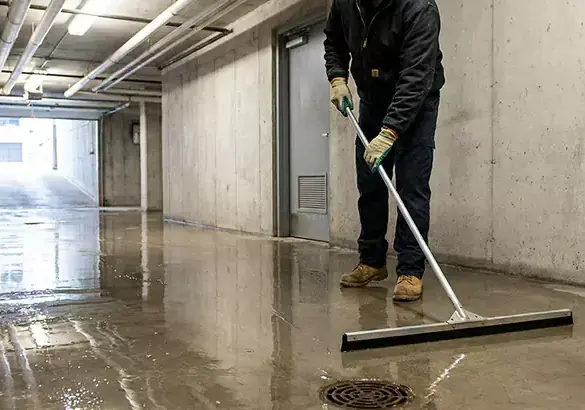
Standing water is extracted first; evaporating it takes far longer.
- 3Open the house up
Move furniture off wet floors and open closets and cabinets.
- 4Leave the equipment on
Air movers and dehumidifiers work around the clock; switching them off slows drying.
IICRC S500 is the industry standard for professional water damage restoration. It treats drying as a measured process: map the moisture, classify the loss, set the equipment to the load and verify the result with readings.
How structural drying is handled in Corona
- Map and classify
The tech who does the walkthrough maps moisture and sets the class of loss, from Class 1 to Class 4.
- Size the equipment
The drying team places air movers for each room's evaporation load and sizes LGR dehumidifiers to the space.
- Target dense materials
Plaster, hardwood and block get focused airflow, floor mats or desiccant dehumidifiers.
- Read daily until dry
Readings are logged every day and equipment comes out when materials are within 2 to 4 points of a dry reference.
What does structural drying & dehumidification cost in Corona, NY?
In Corona, NY, structural drying typically runs $1,000 to $6,500, depending on the class of loss, the number of rooms, the materials involved and how many days the equipment runs.
Class 1 or 2, one area
$1,000 to $2,200
Air movers, One LGR dehumidifier, Daily readings
Several rooms or a floor
$2,200 to $4,500
Multiple dehumidifiers, Wall cavity drying, Drying log
Class 3 or 4 materials
$4,500 to $6,500+
Desiccants or floor mats, Plaster and hardwood, Full claim file
Drivers: the water category, the square footage, the material class and how fast drying started. For a planning range, try the water damage cost calculator.
Class 1 through 4
- Class 1: a small area with little absorbed water.
- Class 2: a whole room, with water wicked up walls and into carpet.
- Class 3: water from above, soaking ceilings, walls and floors.
- Class 4: dense materials such as hardwood, plaster, brick and concrete that hold water deep and need desiccants or specialty methods.
Corona houses often land in Class 4 because of plaster walls, oak floors and block cellars.
Air movers and dehumidifiers work together
Air movers push dry air across wet surfaces so water evaporates. LGR (low grain refrigerant) dehumidifiers pull that water back out of the air so it does not settle somewhere else. Desiccant dehumidifiers take over in cold cellars and for dense Class 4 materials. The drying team adjusts the setup as readings drop.
The drying goal
Equipment stays until the readings say dry, not until the surface looks dry. The goal is wet material within 2 to 4 points of a dry reference of the same material in an unaffected part of the house. Mold can start growing inside 24 to 48 hours on wet materials, which is why drying starts right after water extraction. For how the drying is recorded for insurers, see the claim notes on burst pipe cleanup. The Ready.gov flood page and EPA WaterSense offer related household guidance.
How structural drying is held to a standard
What separates a finished dry-out from a cosmetic one is the order of the work.
Rapid local response
The Corona restoration crew works around the clock, so a Saturday night cloudburst gets the same start as a Tuesday morning leak.
IICRC S500 drying standard
IICRC S500 is the industry drying standard. Equipment stays until the readings say dry, not until the floor looks dry.
Claim-ready documentation
Moisture maps, daily readings and timestamped photos taken before any demolition go into the claim file.
Queens water experts
Cellars, basement units, floor drains, steam heat and prewar pipes are everyday work for local water damage experts.
Related water damage services in Corona
 Water Extraction & RemovalView service
 Burst Pipe CleanupView service
 Basement Flooding CleanupView service
Service area: Corona, Queens
The Corona restoration crew covers Corona, North Corona, Corona Heights, Lefrak City and the blocks around Corona Plaza, with East Elmhurst, Elmhurst, Jackson Heights, Rego Park and Flushing close by.
Every neighborhood and ZIP coveredStructural drying questions, answered
What is structural drying?
Drying the building itself, meaning framing, subfloor, walls and slab, to a measured moisture level, not just drying the surfaces you can see.
What is an LGR dehumidifier?
A low grain refrigerant dehumidifier that keeps pulling water out of the air even as the air gets drier, which speeds structural drying.
Why can't fans alone dry a house?
Fans move moisture into the air, but without dehumidifiers that moisture settles back into other materials.
How is dry measured?
With moisture meters compared against a dry reference of the same material in an unaffected area. Readings within 2 to 4 points mean the goal is met.
Can the equipment be turned off at night?
It should run continuously. Turning it off lets humidity rise and slows the whole job.
How long does structural drying take?
A contained Class 1 or 2 loss usually dries in three to five days. Hardwood, plaster and block take longer.
Wet walls or floors in Corona? Call now.
Air movers, LGR dehumidifiers and daily readings until the materials match a dry reference.