About Corona NY Water Damage Restoration
24/7 water damage restoration in Corona, Queens, from the first extraction to the final moisture reading.
Find us on GoogleWater damage restoration built around how water behaves in Corona
Corona grew up around the elevated tracks on Roosevelt Avenue, with blocks of attached brick rowhouses, two-family homes and six-story walk-ups, and later the Lefrak City towers. Most buildings have a cellar, many have a finished basement unit, and a lot of them still run on steam heat and older pipes. Those details decide how water damage happens here.
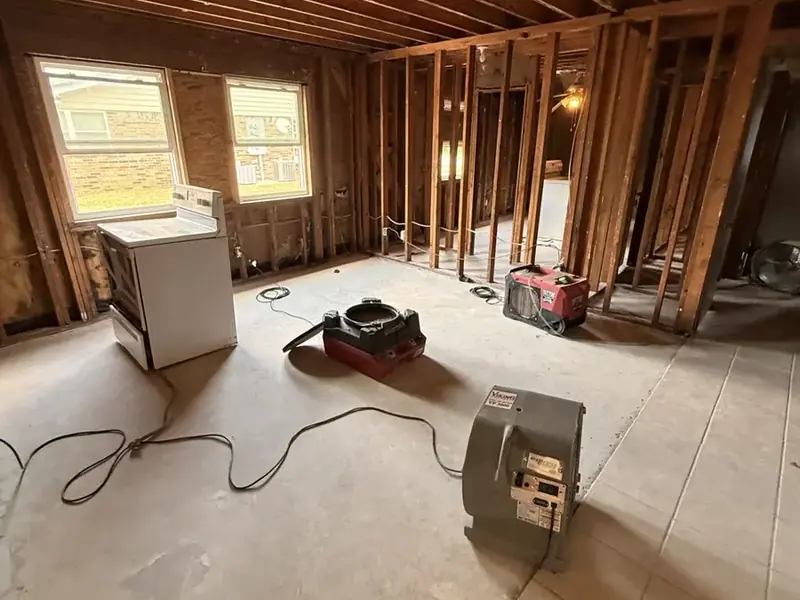
The restoration team extracts the standing water, maps what is still wet behind the walls and under the floors, and dries the structure to the IICRC S500 standard. Sewer backups and storm water are handled as Category 3. Equipment stays until the readings say dry.
Every loss is documented with a moisture map, daily readings and timestamped photos, so the claim file is ready when the adjuster asks for it. Pricing is shown as typical ranges, and drying times are the norms of the trade.
How the dry-out is held to a standard
- 01
Moisture mapping
The tech who does the walkthrough maps wet materials with thermal imaging and pinless meters before any equipment goes down.
- 02
Extraction
The extraction crew pulls standing water with truck-mounted extraction, so the water leaves the building instead of moving to the next room.
- 03
Air movers and LGR
The drying team sets air movers to each room's evaporation load, and LGR dehumidifiers pull that moisture back out of the air.
- 04
Dry verification
Crews log readings daily and pull equipment once wet material is within 2 to 4 points of a dry reference in the same building.
- IICRC S500 drying standard
- Category 1, 2 and 3 protocols
- Class 1 through 4 equipment sizing
- EPA-registered antimicrobial
What separates a finished dry-out from a cosmetic one
Measured, not guessed
Moisture mapping before any equipment goes down, and daily readings until wet materials are within 2 to 4 points of a dry reference.
Category decides the plan
Clean, gray and black water are handled differently. Porous materials touched by Category 3 water get removed, not dried.
A file an insurer can use
Moisture maps, psychrometric logs and timestamped photos before demolition. Coverage depends on your policy, so it is worth checking with your own insurer.
How the local pros approach a Corona water loss
What separates a finished dry-out from a cosmetic one is the order of the work.
Rapid local response
The Corona restoration crew works around the clock, so a Saturday night cloudburst gets the same start as a Tuesday morning leak.
IICRC S500 drying standard
IICRC S500 is the industry drying standard. Equipment stays until the readings say dry, not until the floor looks dry.
Claim-ready documentation
Moisture maps, daily readings and timestamped photos taken before any demolition go into the claim file.
Queens water experts
Cellars, basement units, floor drains, steam heat and prewar pipes are everyday work for local water damage experts.
Water damage in Corona? Call now.
The restoration team extracts standing water, dries to the IICRC S500 standard and documents the loss for your claim.